The idea
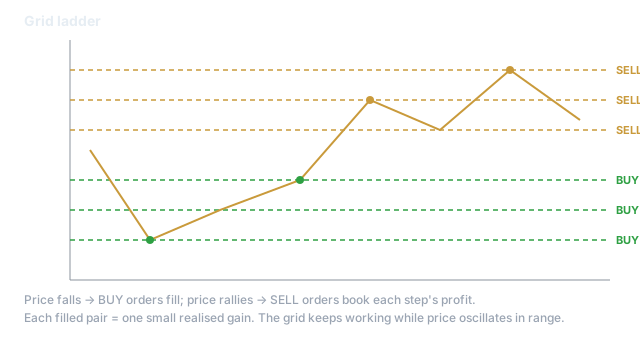
A Grid system splits a price range into levels and places a ladder of orders: buy as price drops, sell as it rises. Each completed buy→sell pair books a small profit. Over many oscillations, those small profits add up.
When Grid shines
- •Sideways / ranging markets with regular up-and-down movement.
- •Liquid pairs (BTC, ETH, major alts) where the spread is tight and fills are reliable.
When Grid struggles
- •Strong one-way trends. If price leaves the range and keeps going, the system keeps buying into a falling market (or misses the run up). This is where range bounds, hedging and a floating-loss guard matter.
Key parameters
- •Range (upper / lower): the band the grid operates in. Wider = safer but slower; narrower = more trades but higher breakout risk.
- •Number of grids: more levels = smaller, more frequent profits and tighter spacing.
- •Step distribution (arithmetic vs geometric): arithmetic spaces levels evenly; geometric widens spacing toward the edges — useful when you expect bigger moves at the extremes.
- •Deposit & leverage: define position size. Higher leverage amplifies both profit and liquidation risk.
A sensible first setup
Pick a liquid pair, a range around the current price you believe will hold, a moderate number of grids, low leverage (3–5x), and turn hedging on. Then backtest before going live.