The idea
Hedging means holding a second, opposite position that profits when your main position loses. If a Grid/DCA long is sliding into a drawdown, a short hedge gains roughly what the long loses — so further downside is neutralized instead of compounding.
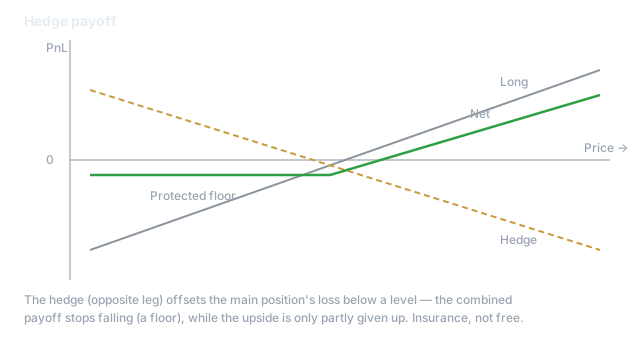
Hedge vs stop-loss — the key difference
- •A stop-loss *closes* your position at a loss and ends the trade. You're out, the loss is realized, and if price rebounds you miss it.
- •A hedge *keeps* your main position open and offsets the downside. When the market stabilizes, you remove the hedge and the original strategy continues — often recovering the drawdown.
A stop-loss is a hard exit; a hedge is a pause button on risk.
When a hedge helps
- •Sharp drops where you believe the asset recovers, but you don't want to sit through the full drawdown unprotected.
- •Protecting an averaging (DCA) position from running out of safety orders during a fast move.
When a hedge does NOT help
- •It costs fees and funding to hold. In a calm market a constantly-on hedge just bleeds cost.
- •It can lock in a range: if you hedge near the bottom and price snaps back, the hedge loses what the main position regains. Timing the trigger matters.
On TalixTrade
You enable hedging per system and set a trigger (e.g. activate the hedge after an X% adverse move), plus its size and direction. Futures + Hedge Mode are required. See "Hedge trigger: how to choose %" for tuning.